Cattle vs. Carcass: Why You Need Multiple Forecasts to Make Decisions in the Beef Market
Published: April 15, 2026
Introduction
When two time-tested forecast models point in different directions, it is tempting to assume that one of them must be wrong. In practice, that gap between the two forecasts is often the real signal.
Take the Choice ribeye (109 E1) for example. A bone-in ribeye forecast built from live cattle futures tells you what the broader market is pricing in. A forecast built from boxed beef fundamentals tells you what may be happening inside the carcass.
Those are not always the same story.
That is why buyers cannot rely on a single forward curve to make procurement decisions. If you’re running your procurement strategy off the forward curve alone, you are taking directional risk you can’t see.
One Market, Diverging Signals
Figure 1 shows a six-month forecast using the DecisionNext CME model vs. the Cutout model. The CME-linked ribeye forecast trends lower, falling well below $9.00/lb in July, while the cutout model stays materially higher, staying above $11.00/lb throughout the summer (fig. 1).
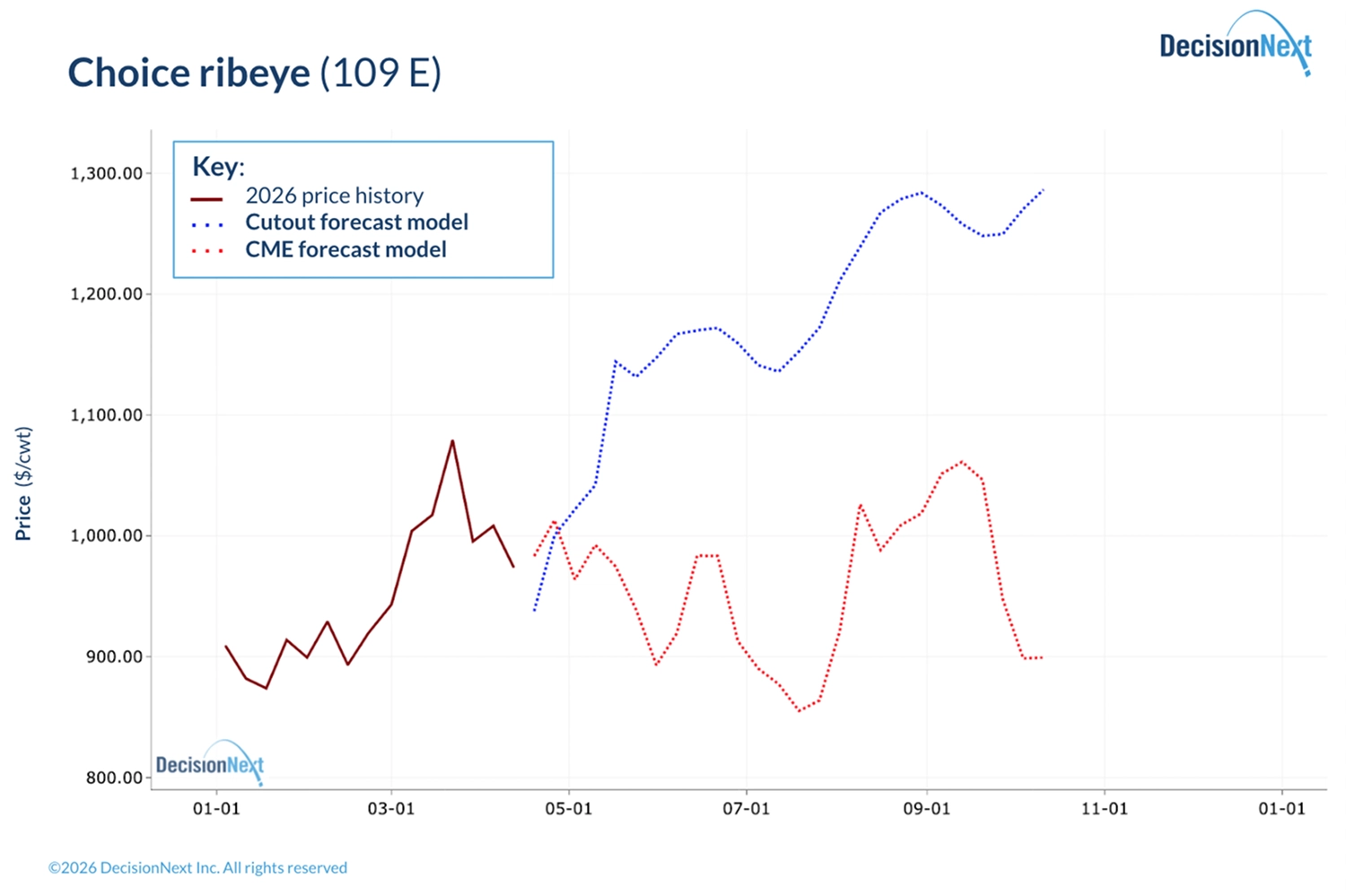
Figure 1 – Chart illustrating divergence between Cutout Model and CME Forecast Model for Choice Ribeye 109(E)
That divergence between the two forecasts is not just model noise. It reflects the fact that live cattle and boxed beef do not always move together. Futures may be pricing in softer cattle expectations, while ribeye values stay supported by boxed beef demand, grading mix, or tighter middle-meat availability.
For a buyer, the lesson is straightforward: one forecast can miss what another one catches.
What the CME Forecast Tells You
The CME-based view starts with live cattle futures and translates that signal into an expected ribeye price (Fig. 2).
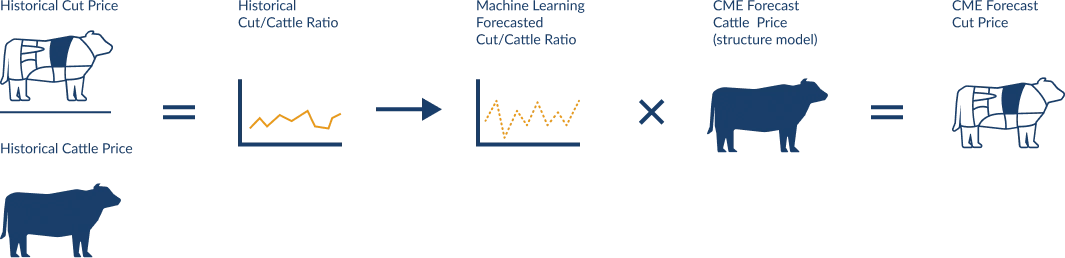
Figure 2 – The Beef CME Model is a ratio-based model that uses historical beef and cattle prices to calculate a relationship between the two. It then forecasts that ratio and applies it to CME live cattle futures to estimate future beef prices.
It is valuable because it shows what the market is pricing in right now.
But it is still a forward curve. It is an opinion, not an outcome. The futures curve reflects consensus expectations—but consensus is often slow to price in shifts in grading, demand, or boxed beef margins. It is important to note that futures markets are useful benchmarks, but they are not consistently accurate predictors of where cash markets will settle.
What the Cutout Forecast Adds
The cutout-based forecast starts from carcass economics instead of futures sentiment. It looks at how the ribeye is valued relative to the broader cutout and how supply-and-demand conditions may shape that relationship (Fig. 3).
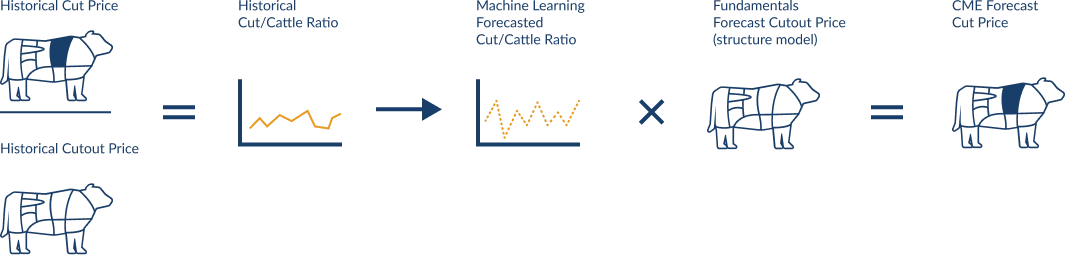
Figure 3 – The Cutout Model uses historical graded beef prices and graded cutout prices to calculate a relationship between the two. It then forecasts that ratio, builds a forecast for graded cutout prices using macroeconomic inputs, and combines them to estimate future beef prices.
That matters because ribeyes can strengthen even when cattle futures soften. If premium beef demand holds up, if grading changes, or if middle meats tighten seasonally, the carcass can tell a more bullish story than the board.
Multiple Forecasts Lead to Better Decisions
Procurement teams are not forecasting for the sake of being right on paper—they are making real buying decisions with real dollars at risk.
The objective is simple: act on the best possible view of where the market is going.
Any single forecast is a partial view of the market. Acting on it alone is a bet on what it misses.And that is where multiple forecasts become valuable.
- The CME curve shows what the market believes today.
- The cutout model shows what the beef market may actually do.
Each reflects a different driver of price. Each can be directionally right—or incomplete on its own.
When they agree, confidence increases and decisions become easier to defend.
When they diverge, that is not noise—it is a signal that something in the market structure is shifting and deserves closer attention.
This is how better decisions get made. Not by relying on a single number, but by understanding the full picture behind it.
The CME live cattle curve reflects tradable market sentiment. It can drift, miss turning points, or lag physical market changes. The cutout forecast reflects carcass-level fundamentals that often move on a different timeline reacting to consumer demand and cut price nuances.
A Forward Curve Is Not A Business Strategy by Itself
When you compare multiple forecasts, you reduce the risk of anchoring to a single number and increase your ability to respond to market movements – for instance, when cattle and carcass values decouple. That is how better procurement decisions get made. You are less likely to overcommit to one market view and more likely to spot when futures sentiment and beef fundamentals are telling different stories.
The forward curve is a starting point. It is not a strategy.
If you’re not stress-testing it against carcass fundamentals, you’re not managing risk—you’re inheriting it.
Contact us today!
Learn how DecisionNext can help redefine your buying or selling strategies. Contact us now.