Reshaping Seasonality

Published: May 15, 2026
Retailers Are Rewriting the Summer Beef Playbook
Key Insights
- For the week ending May 3, 2026, chuck rolls were priced at $483.70/cwt, up 27.7% from the comparable early-May week in 2025.
- Over that same period, the price of strips were down 2.6% year over year and heavy boneless ribeyes were down 10.9%.
- This divergence points to a meaningful shift in retail feature strategy: value-oriented chuck items are gaining promotional momentum while traditional summer middle meats are lagging.
- Retailers using last year’s ad calendar as the baseline for this summer may be exposed to margin, inventory, and pricing risk.
The Summer Beef Playbook Is Changing
For years, the seasonal beef playbook has been relatively predictable. As grilling season approaches, retailers increase promotions on middle meats like ribeyes and strips, demand accelerates, and prices typically strengthen through late spring and summer.
This year, the signal is different.
The Market Is Signaling a Shift in Retail Strategy
Choice chuck rolls are up over 25% year-over-year (Fig. 1). This would be notable in any market, but It is even more important when strips and ribeyes — the cuts that typically define summer grilling season — are trading below last year.
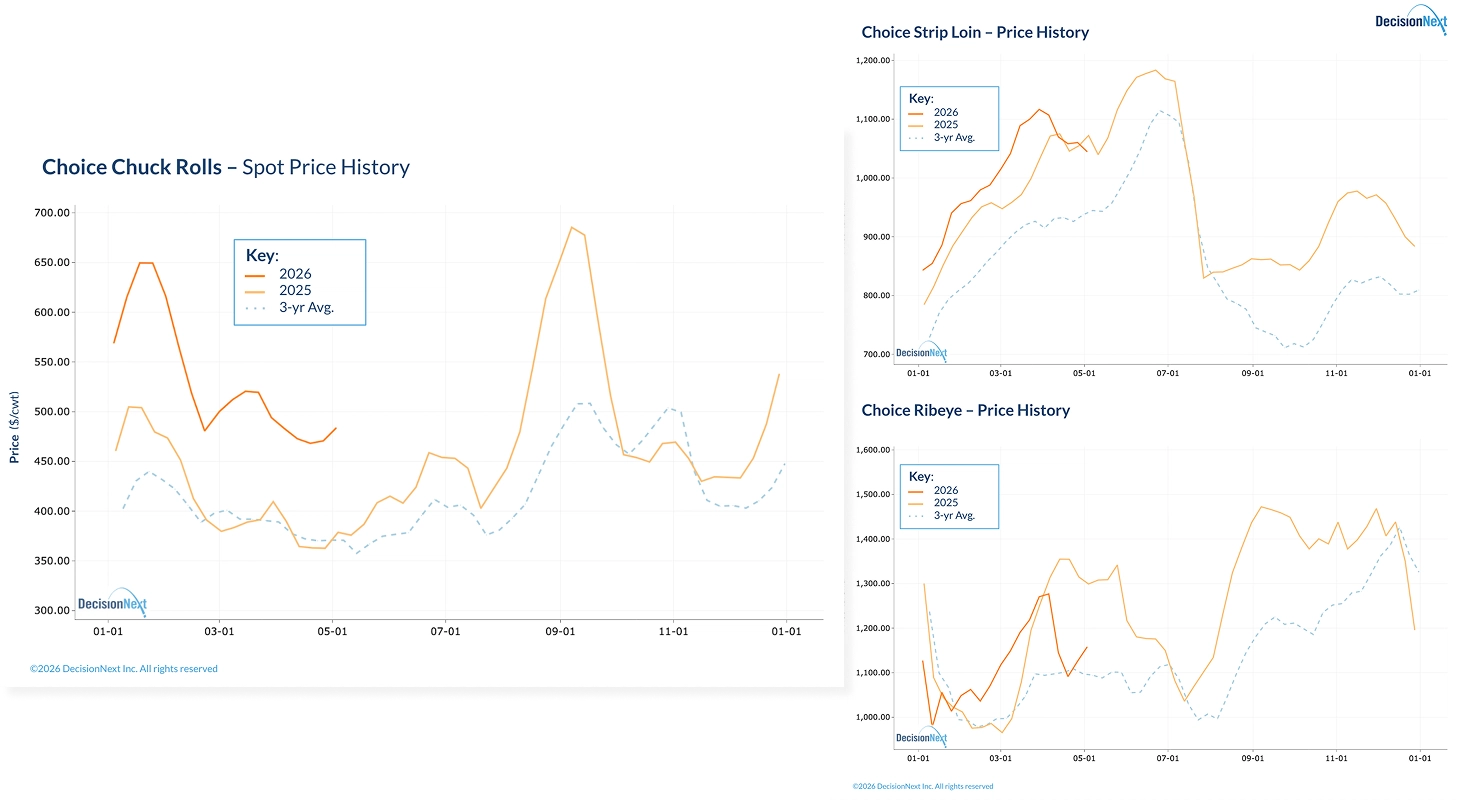
Figure 1 – The price of choice chuck rolls is up 25% year over year while ribs and strips are trading down.
For the week ending May 3, 2026, chuck rolls traded at $483.70/cwt, compared with $378.66/cwt in the comparable early-May week last year — a 27.7% increase. At the same time, strips traded at $1,044.64/cwt, down 2.6%, while heavy boneless ribeyes traded at $1,157.76/cwt, down 10.9% year over year (Fig. 1).
That is not a small deviation from normal seasonal behavior. It is a meaningful disconnect between value cuts and the middle meats that usually carry summer grilling momentum. For retailers, that disconnect can flow quickly into feature planning, procurement timing, margin expectations, and inventory exposure.
And this is not just a one week anomaly. Anyone who has been watching volume by pricing type is keenly aware that the industry has been booking chuck rolls out front at an elevated rate all year (Fig. 2).
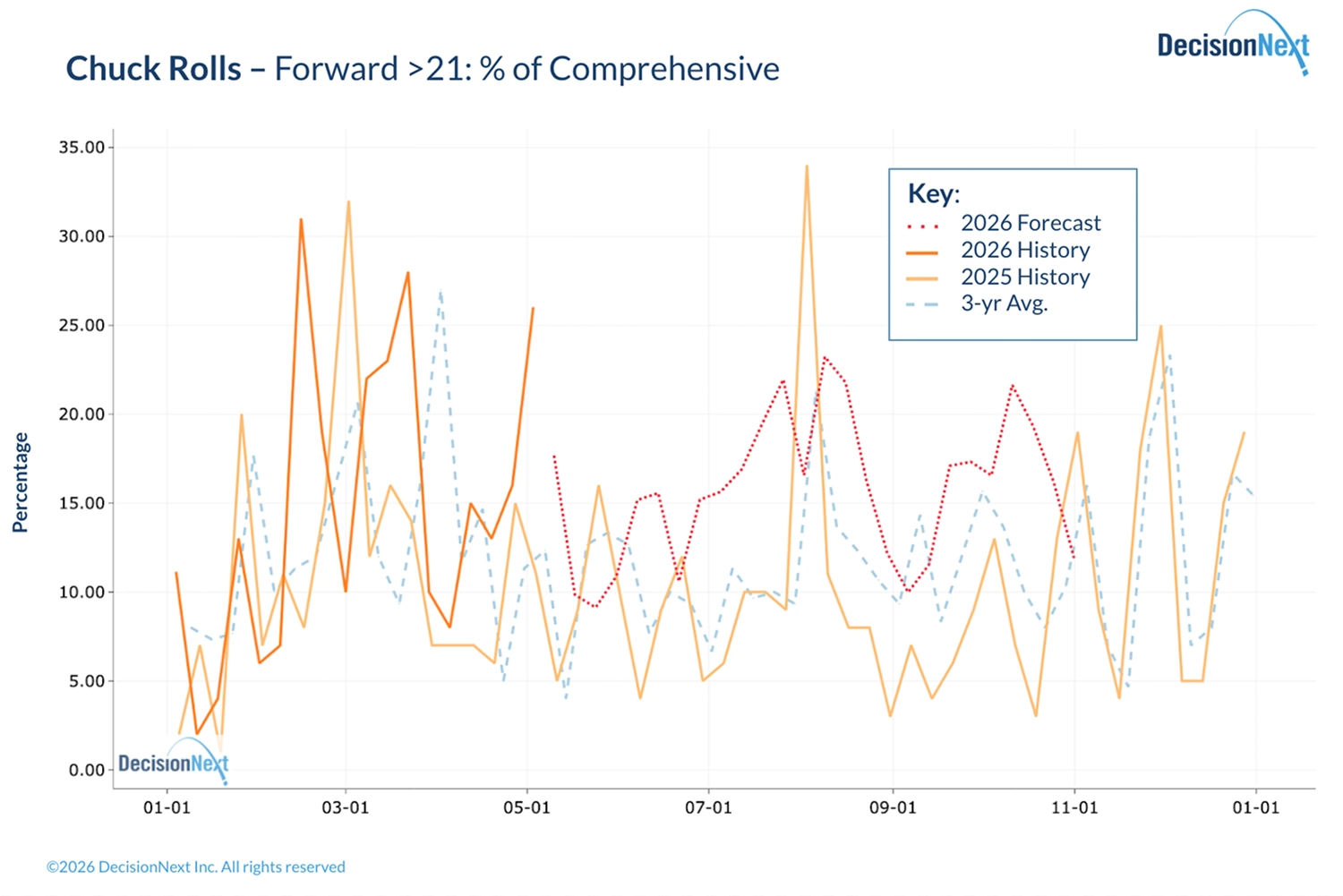
Figure 2 – Increased forward commitments relative to available production suggest stronger retailer positioning around chuck items in 2026.
The forward booking behavior is especially notable given the broader production backdrop. Beef supplies remain tighter than historical norms, limiting available chuck roll volume relative to recent years. As retailers compete for fewer pounds while simultaneously increasing feature activity on chuck items, price inflation becomes more understandable from a market structure perspective — not simply a short-term promotional shift.
Part of the move is clearly tied to changing consumer behavior, but supply dynamics are reinforcing the trend. Retailers are booking more chuck roll volume forward than they were a year ago, even as overall beef production remains below prior-year levels. In other words, stronger feature demand is colliding with tighter front-end availability.
That combination matters. Reduced production alone can support higher prices, but the willingness of retailers to secure chuck volume earlier — despite elevated pricing — suggests confidence that value-oriented beef items will continue to outperform premium middle meats this summer.
The Change in Behavior is Showing Up in Retail Ads
The USDA’s Weekly Grocery Store Beef Feature Activity report reinforces the shift toward value-oriented beef promotions. Boneless chuck roast features appeared in nearly 5,945 stores during the latest reporting week, up significantly from 4,739 stores a year earlier, even as advertised prices climbed from $6.51/lb to $8.42/lb. In contrast, the number of stores promoting boneless strip steak declined year over year despite retail prices easing from $13.27/lb to $12.79/lb.
Comparing this year’s retail ad report for the first week of May to last year’s, it is apparent that retailers are leaning more aggressively into chuck promotions despite significantly higher shelf prices.
That shift aligns with the broader market structure shown in Figures 1 and 2. While ribeyes and strips remain below year-ago levels, elevated chuck pricing suggests retailers are prioritizing value-oriented beef features while also competing for tighter available supply.
The likely driver is twofold: consumers are still buying beef, but they are becoming more selective about where they spend within the meat case, while retailers are also managing through a tighter supply environment. Chuck allows consumers to remain in the beef category without committing to premium steak price points, and retailers appear increasingly willing to secure chuck volume earlier to support summer feature activity. With production running below prior-year levels, that additional forward buying pressure is helping support elevated chuck pricing even as middle meats lag.
What It Means for Retailers
This shift creates both opportunity and risk.
The opportunity is clear: retailers that align feature activity with current consumer demand may be better positioned to maintain beef movement and protect overall category performance.
The risk lies in assuming that traditional summer merchandising strategies will deliver the same results they have historically. Retailers leaning too heavily on premium end meats may face slower movement, greater inventory exposure, and margin pressure if consumer resistance to higher steak prices persists through the summer grilling season.
The 2026 beef market is not eliminating seasonality — it is reshaping it.