Choice Flap Prices Have Fallen 23% Since May. What Comes Next?
Published: August 12, 2026
Key insights
- Choice flap prices fell to $765/cwt for the week ending August 2, the fifth consecutive weekly decline.
- Prices are down approximately $224/cwt, or 23%, from their May 31 level and about 20% from the comparable week in 2025.
- Machine Learning anticipates a late-summer rebound, while CME projects continued weakness through November.
- The difference between the two forecasts highlights the uncertainty in what is a market with strong demand and an increasingly softer cattle price forecast.
An Early Peak and Steady Summer Decline
Choice flap prices continued their retreat during the week ending August 2, falling over $36cwt to $765/cwt. Prices have now declined for five consecutive weeks and are approximately 23% below their May 31 level of $989/cwt.
The current price is also approximately 20% below the comparable week last year, when choice flaps averaged $956/cwt.
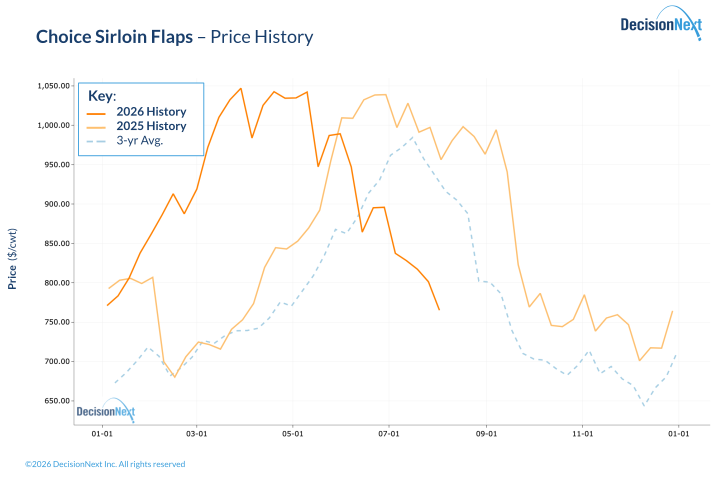
Figure 1 - Weekly choice flap prices through August 2, 2026, compared with the corresponding 2025 series.
This year’s movement stands out because choice flap prices have typically strengthened into early summer, with seasonal highs often occurring in July or August. In contrast, 2026 saw an unusually early peak, with weekly prices trending above $1,000/cwt from mid-March through mid-May.
Values are now down roughly 27% from the March high, with losses extending through a brief late-June pause and accelerating again in July. The latest weekly decline of 4.5% underscores the persistence of this downtrend.
Two Very Different Paths Through the End of the Year
DecisionNext’s forecasts are divided into two broad groups. The Machine Learning and Cutout models anticipate a rebound from the current level, while CME and Fundamentals project further declines into late November.
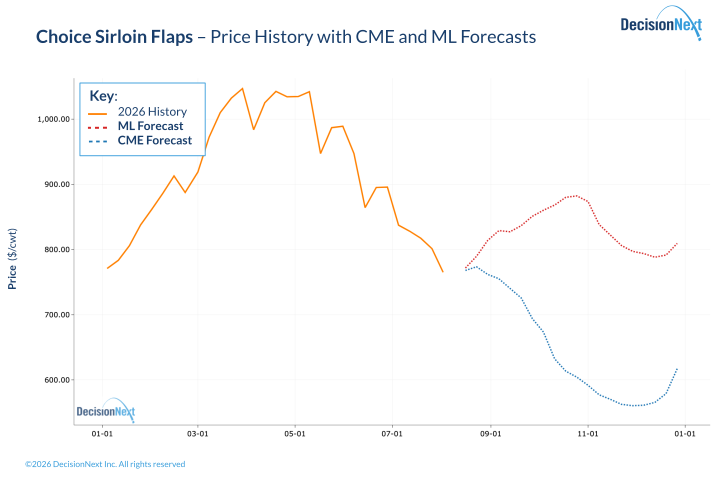
Figure 2 - Actual choice flap prices and Machine Learning and CME forecast scenarios through end of 2026.
The Machine Learning forecast model represents the recovery scenario with demand returning to 2025 levels. It expects prices to begin firming in August, rise above $850/cwt by late September and approach $880/cwt in October.
In contrast, the CME forecast model presents a markedly more bearish path. Its forecast calls for prices to fall below $700/cwt by late September and approach $600/cwt during October.
The two forecasts are relatively close during August but begin to separate materially in September, continuing to diverge through the end of the year.
What the Forecast Range Means
The forecast divergence presents two different planning scenarios:
- Machine Learning indicates that the recent decline may be followed by a seasonal rebound, potentially pushing prices back near this year’s highs by late January.
- Conversely, CME suggests that current market conditions could override typical seasonal trends, leading to significantly lower prices before a modest winter recovery.
For buyers, ongoing declines could present opportunities to purchase at notably lower prices later in the year. They should use this forecast to gain leverage in negotiations for future volumes, as the market trend points to continued price decreases.
Sellers face the risk of missing out on seasonal gains; waiting for a rebound might be costly if prices follow the trajectory of live cattle prices.
The main indicator to monitor is whether prices establish a floor and start to recover in August and September. A secondary indicator would be changes in cattle forecasts, especially since much of the recent decline aligns with cattle price drops that were part of a broader cutout selloff. Finally, observing changes in volumes at negotiated and formula levels will help gauge demand tightness.
As market conditions are constantly evolving, encountering diverging forecasts can raise questions. However, it is crucial to include these conflicting data points in the analysis to better understand market drivers and future trends. Relying solely on a single forecast without such a process risks inaccurate predictions. Developing multiple forecasts, even if they disagree, is essential to grasp the complexities of the ever-changing beef market. This also ensures you are staying ahead of the rest of your competition.