Top Butt Prices Slide – But Will They Rebound by Year-End?
Published: July 28, 2026
Early peak gives way to steady decline
Choice boneless top butt prices have moved steadily lower since reaching an early peak this spring. During the week ending July 19, the market averaged $533/cwt—down $123/cwt, or nearly 19%, from its late-March high of $657/cwt.
The decline is notable not only for its size, but also for its timing. Last year, top butt prices continued climbing into the summer, eventually reaching approximately $758/cwt during the first week of July. This year, the market peaked more than three months earlier and has trended lower since.
That reversal has also opened a substantial year-over-year gap. Top butts were approximately $682/cwt during the comparable week in 2025, placing the current market roughly 22% below last year.
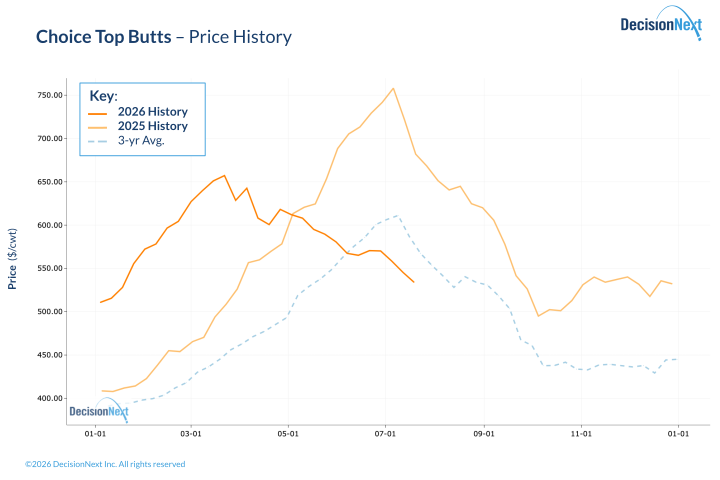
Figure 1 - Unlike 2025, when top butt prices climbed into early July, the 2026 market peaked in late March and has declined steadily since.
Forecasts point lower before diverging
The CME and Machine Learning forecasts both indicate that the market could remain under pressure in the weeks ahead. Neither model projects a return to the March high, and both show prices moving below current levels as the market enters the fall.
The CME forecast presents the more bearish scenario. It projects a deeper correction into early October, with prices falling into the low $420s/cwt. From there, the forecast remains comparatively subdued through the end of the year.
The Machine Learning forecast anticipates a shallower decline. It reaches a fall low of approximately $490/cwt before reversing direction and beginning a sustained fourth-quarter recovery. By late December, it projects top butts above $590/cwt – significantly elevated above today’s market and roughly $120/cwt higher than the CME outlook in the same time period.
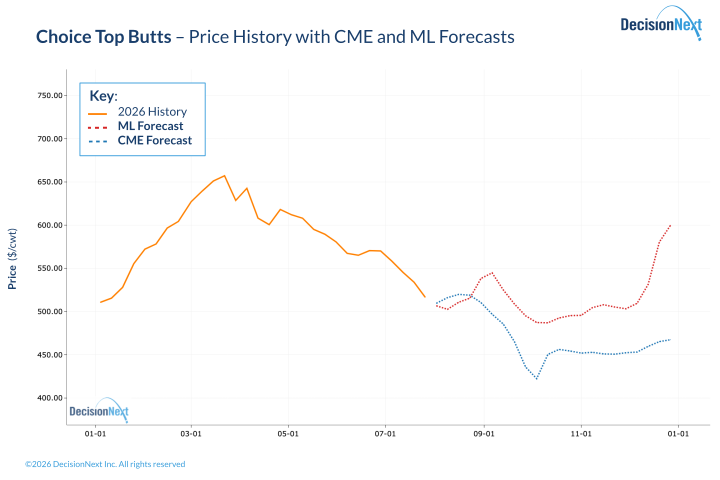
Figure 2 - CME and Machine Learning both anticipate additional softness, but diverge during the fourth quarter as Machine Learning projects a recovery and CME remains subdued.
A widening range of possible outcomes
The forecasts do not determine which end-of-year scenario will dominate, nor do they explain the factors behind the eventual result. However, by presenting two accurate models, they highlight the diverging trends occurring in the market. The ML forecast, which relies on historical data such as seasonality, trend, and other predictive variables within the beef market, indicates a higher value compared to the CME-ratio-based forecast. This suggests that the market may not have declined as sharply as futures markets imply. Meanwhile, the futures market clearly predicts continued declines in cattle values, as seen in recent movements.
Considering the historical tendency of futures to underprice future values, the CME forecast likely represents the price floor for the rest of 2026, with the ML forecast being closer to the expected or upper range. Although these forecasts seem different at first, understanding the reasoning behind each model helps us explore the mechanisms guiding market expectations and possible outcomes.